Dragon Tiger and Teen Patti Master: What's the Real Difference?
One is over in moments; the other gives players several decisions. Compare the cards, pace, rules and learning curve before choosing what to learn.
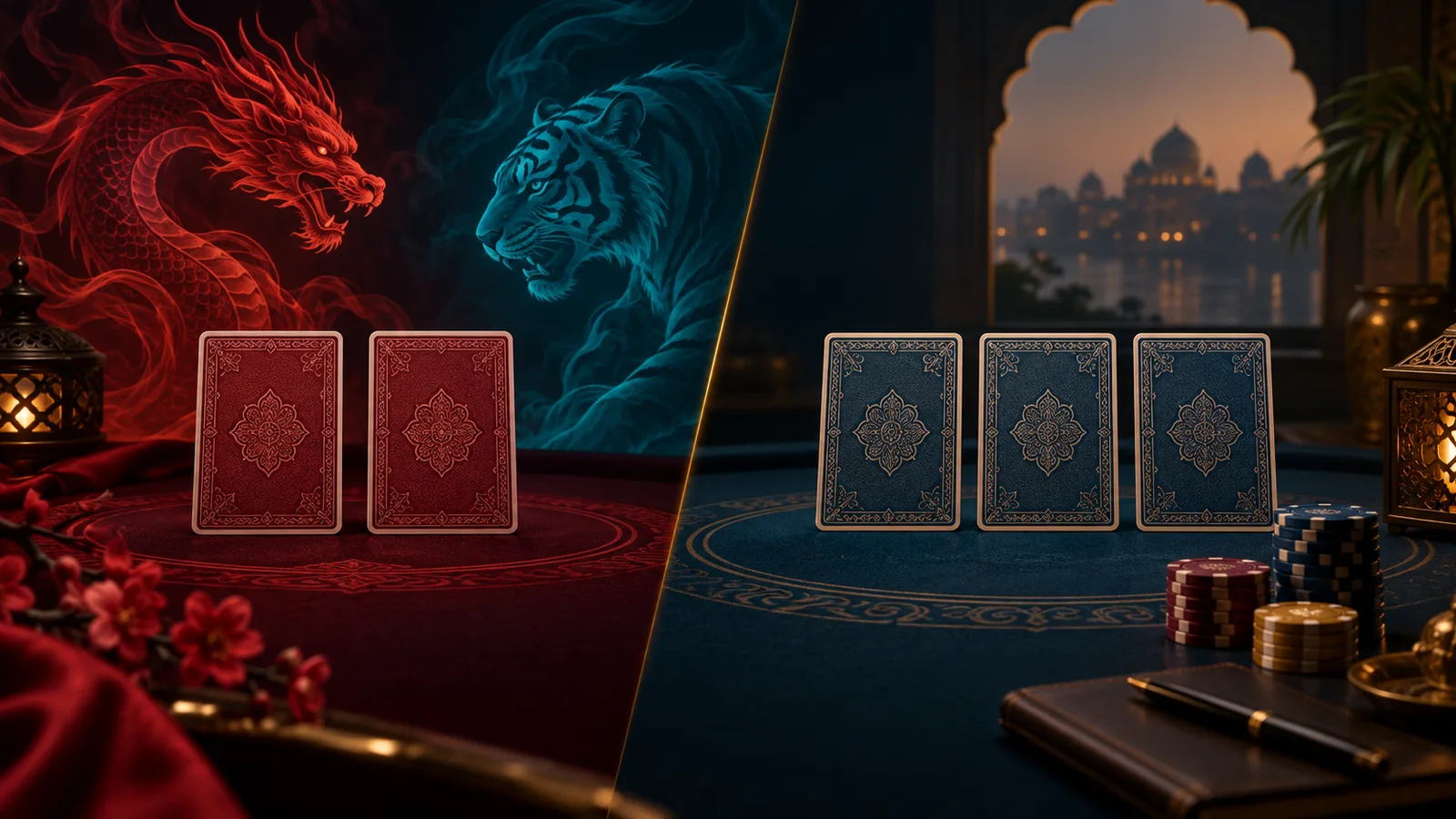
If you've spent any time around Indian card games online, you've probably come across both names in the same breath: Dragon Tiger and Teen Patti Master. They're often mentioned together because they show up on the same platforms, but they're built on different ideas of what makes a card game engaging. One is over in the time it takes to read this sentence. The other can have you thinking several moves ahead. Here's how they actually compare.
What Is Dragon Tiger?
Dragon Tiger is about as simple as card-comparison games get. Two cards are dealt: one to a position called Dragon and one to a position called Tiger. Whichever card ranks higher wins that round. If both cards match in rank, the result is a tie under the common rules.
There is no hand to build, no sequence of decisions after the initial selection and no opponent to read. The outcome is locked in when the two cards are dealt. Its appeal is speed, which is why rounds often finish in well under a minute.
What Is Teen Patti Master?
Teen Patti Master is a digital version of Teen Patti, India's classic three-card game, sometimes called Indian Poker. Every player is dealt three cards. The game then unfolds through decisions: play blind or seen, call, raise or fold as action moves around the table, and use a side show when the applicable table rules allow one.
Unlike Dragon Tiger, a Teen Patti round is not fully decided the instant cards are dealt. How you bet, when you fold and whether other players believe your action all affect the result. Our complete Teen Patti beginner guide explains the round step by step.
Dragon Tiger vs Teen Patti Master: Side by Side
| Feature | Dragon Tiger | Teen Patti Master |
|---|---|---|
| Cards dealt | One card each to Dragon and Tiger | Three cards to every player |
| Decisions during a round | None after the initial choice; the result follows the deal | Several: blind or seen, call, raise, fold and sometimes side show |
| Decision depth | Minimal; a chance-based card comparison | Meaningful table decisions, including timing and reading action |
| Round length | Very short, typically under a minute | Longer, with multiple actions per hand |
| Best suited for | People learning a quick, simple comparison format | People who enjoy strategy and table-reading |
The Real Difference: Decisions vs Chance
This is the question most people are asking when they compare the two. Dragon Tiger has no decision-making after the initial choice: the result is a direct comparison of two random cards. Teen Patti is different. The cards dealt are random, but later actions such as reading betting patterns, deciding when to apply pressure and knowing when to fold introduce decision-making that players can practise.
That gameplay distinction should not be confused with a legal exemption. Under India's current central framework, the definition and prohibition of an online money game turn on whether a player pays money or other stakes expecting monetary enrichment, not merely on whether the game contains skill. Neither format is universally "better"; they serve different play styles.
Which Should You Try First?
- If you want something quick and easy to understand in thirty seconds, Dragon Tiger's simplicity is the appeal.
- If you enjoy games where thinking ahead and reading table action matters, Teen Patti has more depth to explore. Start with the basic rules, then compare variants such as Muflis and AK47.
- If you're new to card games, learn with non-cash counters. Most beginners understand the flow after a few practice rounds.
A Quick Note Before You Play
The Promotion and Regulation of Online Gaming Act, 2025 came into force on 1 May 2026. It prohibits offering and participating in online money games and related advertising and fund transfers. A game's label or claimed skill element does not by itself establish legality. Review the current official text and avoid deposits, stakes or cash-linked rewards.
For practical limits and support options, read our responsible play guidance. This comparison explains game mechanics and is not legal advice or an invitation to play for money.
Frequently Asked Questions
Is Dragon Tiger a game of skill?
No meaningful decision occurs after the two cards are dealt. The result follows the random deal and card comparison.
Is Teen Patti Master a game of skill or luck?
Both chance and decisions affect a traditional Teen Patti round. The deal is random, while betting, folding and responding to other players involve judgement. That description of gameplay is not a legal classification.
Which game has longer rounds?
Teen Patti Master, by a wide margin. Its sequence of player actions takes longer than Dragon Tiger's near-instant reveal.
Can beginners learn both games?
Yes. Dragon Tiger is easier to understand immediately, while Teen Patti rewards a short introduction to hand rankings and table actions. Practise without money.
Method and Sources
The title, comparison structure, table and FAQ follow the supplied Word document. The legal note was reviewed against the Ministry of Electronics and Information Technology's Act and Rules collection, including the official commencement notification. Last reviewed: 21 September 2026.

Michael Turner
Michael is TPAPK's Rummy & Strategy Editor, reviewing card-game terminology, rule variants, probability context and responsible strategy limits.